HikmaAI
Agentic Systems
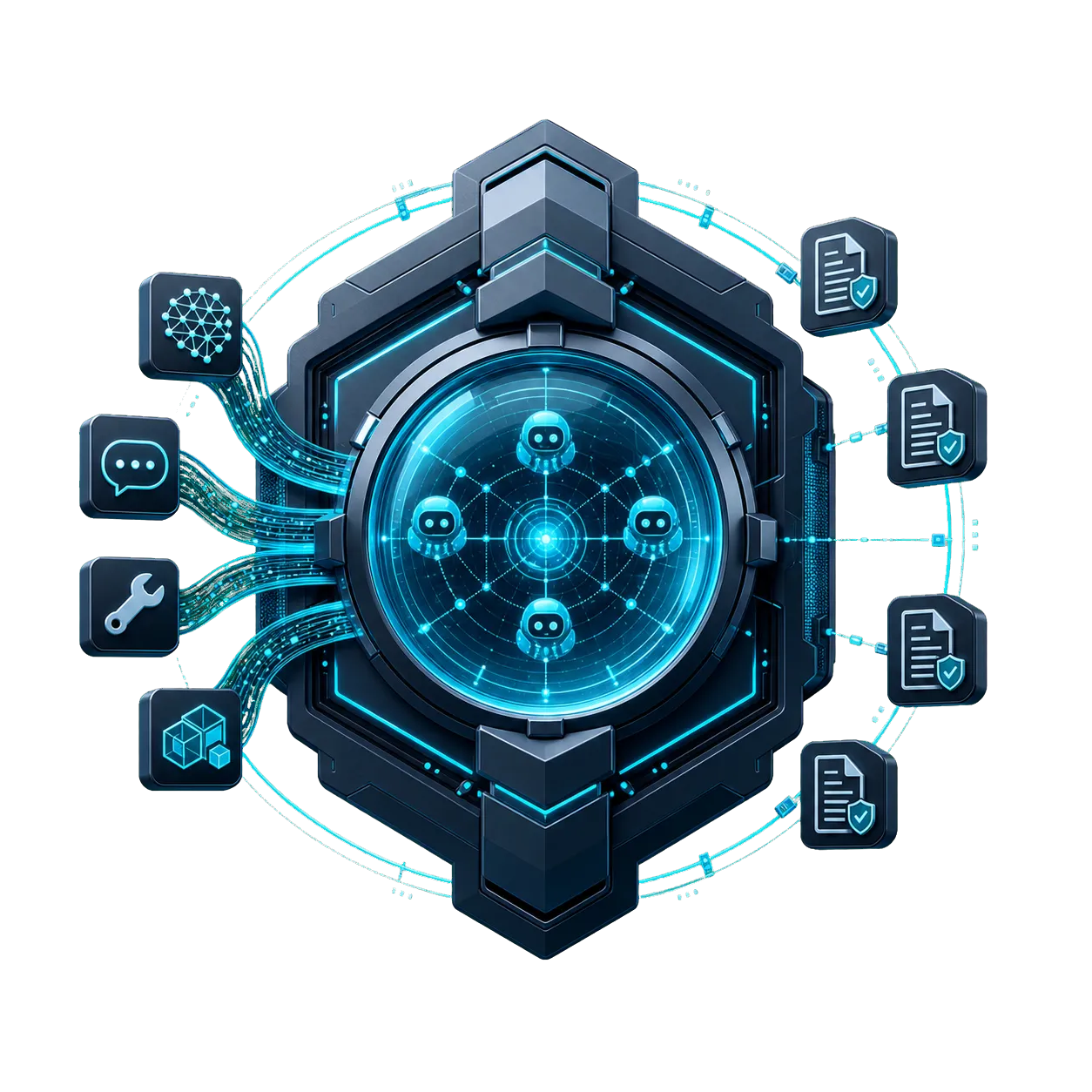
Autonomous systems across the enterprise: models, apps, and processes.
- Models: end-to-end management
- Agents: workflow orchestration
- MCP: Model Context Protocol integration
- Skills: extensible logic and APIs
Real-Time Agentic Security
Three layers. Three board-level questions. Every AI system in your organisation, from the same console.
Platform Architecture
Agentic systems flow into HikmaAI Platform controls, adaptive red teaming, the intelligent gateway, and policy-backed governance.
HikmaAI
Autonomous systems across the enterprise: models, apps, and processes.
HikmaAI
End-to-end AI security and orchestration.
HikmaAI
Adaptive AI vulnerability and risk modeling.
HikmaAI
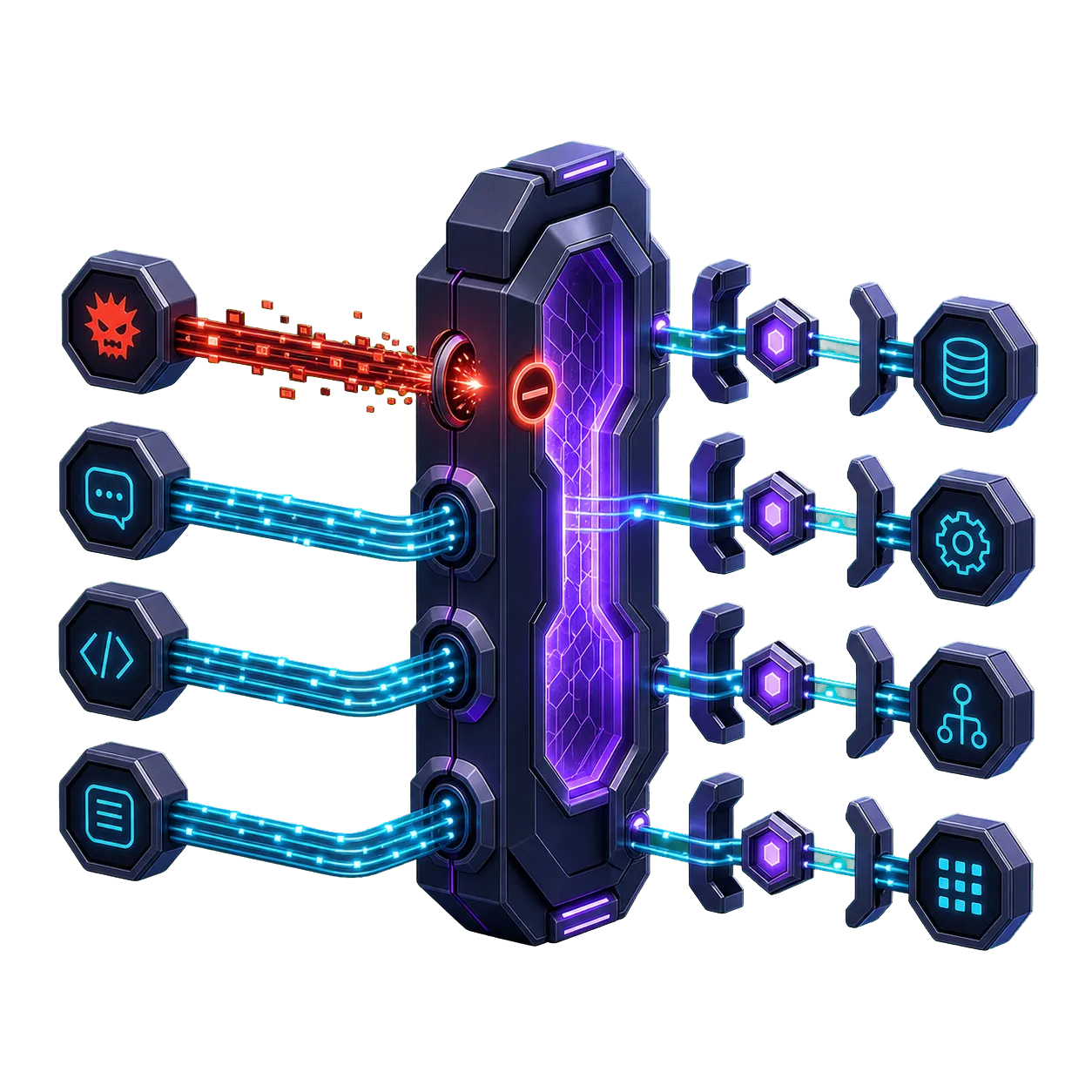
Intelligent secure gateway for AI services, configuring guardrails, governance policies, and runtime controls.
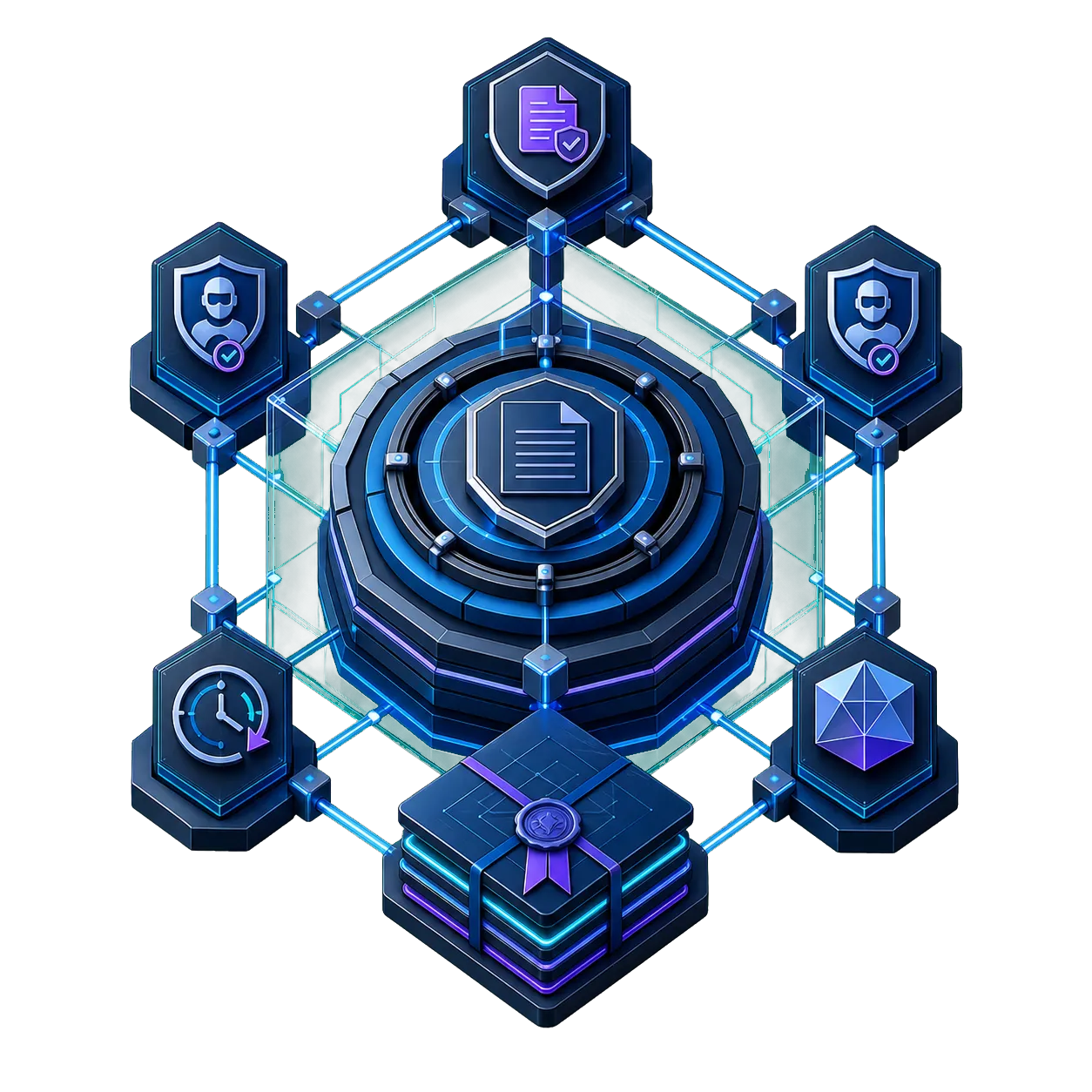
HikmaAI Governance
Policy-as-code and post-deployment compliance reporting.
Day One
What the engineering team gets the moment the container lands. No backlog, no integration sprints.
01
Incident response has one place to look — across all agents, tools, and tenants.
02
Secrets exist in exactly one container. Never in agent memory, logs, or stack traces.
03
The gateway returns 429 after $N of spend — before the budget burns. Not by agent self-restraint.
04
LLM01 prompt injection, LLM06 PII disclosure, LLM08 excessive agency, LLM10 unbounded spend.
05
LangGraph today, OpenClaw now, whatever ships next. Your security posture outlives the choice.
06
EU AI Act, SOC 2, ISO 42001 conversations get shorter when every action is already in a structured log.
Layer 01 · Observe
Continuous coverage with audit-grade evidence.
Weighted risk score 0–100 per agent and per organization. Severity breakdown, trend charts over 7d/30d/90d/1y. Action queue surfaces critical findings without hunting.
Every action logged with actor, timestamp, source IP, and the change performed. Ed25519-signed CSV exports designed for EU AI Act Article 12 record-keeping.
Assessment progress, critical findings, and compliance drift surfaced in-platform and via webhook.
Board-ready and regulator-ready exports for every assessment, with signed audit logs attached as evidence of due diligence.
Layer 02 · Control
Automated red-teaming, compliance, and code-level audit.
Active attacks tailored to your agent's actual behavior, not a static checklist of generic prompts. Every finding reflects a vulnerability your specific system exhibits.
Full coverage across prompt injection, jailbreaking, data leakage, insecure output, excessive agency, supply chain. Every finding is framework-tagged.
Article-by-article evaluation including Article 15 enhanced pillars: accuracy, robustness, explainability. Report designed for regulatory submission.
Tool enumeration, permission analysis, and input validation for any MCP server. Dependency and configuration audit for any Git URL or ZIP upload.
Layer 03 · Govern
RBAC, tenant isolation, programmatic control.
Admin, Member, and read-only roles separate duties between security, platform, and compliance. Every privileged action is logged.
Scoped API keys (hik_*) for programmatic integration. Pin keys to specific agents; revoke without touching user auth. Strict organization scoping by construction.
Risk classification (unacceptable, high, limited, minimal), lifecycle stage, and regulatory context attached to every agent and reflected in every report.
Ed25519-signed bundles for regulators and external auditors. Tamper-evident, verifiable without the platform.
The Intelligent Gateway
The gateway is the only thing the agent can talk to. Everything else is declared, allow-listed, and audited.
Zero Production Change
One engineer. Works with every framework you already operate.
Installs on your hardware or private cloud. Your data never leaves your perimeter. Air-gapped. Zero telemetry.
Air-gapped
Cloud-hosted. Zero infrastructure to manage. Your deployment choice does not change the commercial value of HikmaAI.
Zero ops
Deploy In 5 Steps
Step 01
One binary, one YAML. Runs as a Kubernetes sidecar or Deployment, a standalone Docker container, or an iptables-fronted transparent proxy. No control plane required for base deployment.
Step 02
The agent calls the gateway instead of the provider directly. It holds no token, knows no upstream URL. Framework-agnostic: works for LangGraph, CrewAI, OpenClaw, AutoGen, and any custom orchestrator.
Step 03
One YAML block per agent: allowed providers, tool allow-list or trust-gated tool tiers, cascade depth, budget tier, attestation key. Policy lives next to gateway config, reviewed in PRs like any other infrastructure.
Step 04
AI Firewall in alert mode to baseline traffic. Promote individual controls to enforce in shadow-then-flip fashion, one at a time. Egress allow-list and budget caps are recommended from day one.
Step 05
Stream JSON logs to your SIEM. Export OTel spans to Langfuse, Honeycomb, or any collector. Rotate secrets without restarting pods (SIGHUP hot-reload). Add a new agent by adding a YAML block.
What Ships
Four pillars the gateway proves on every call, across every framework you already operate.
Request Demo
Request a 30-minute demo. We walk your team through the threat model for your specific agentic footprint — and what controlling it looks like.